

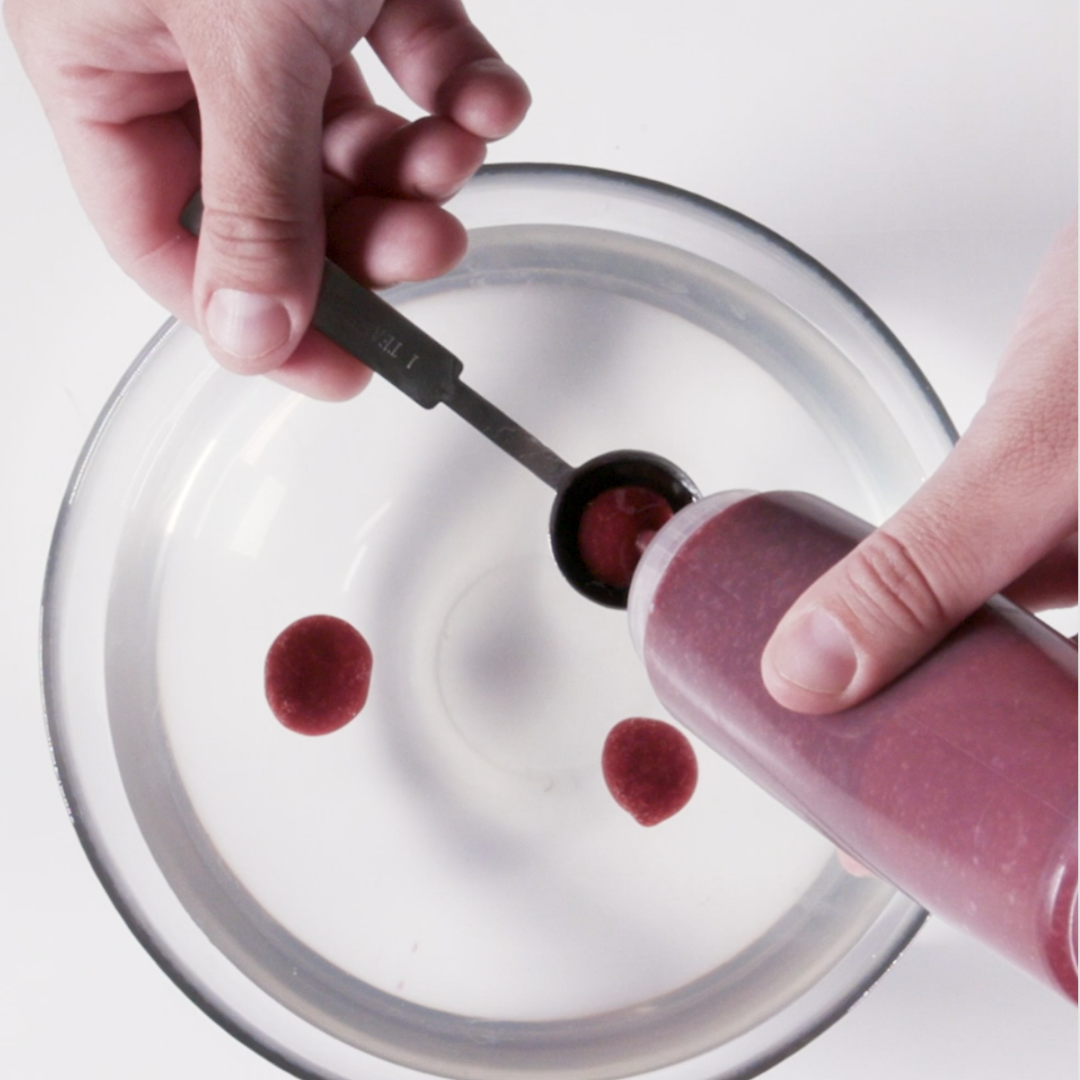
What is Spherification?
Spherification is a revolutionary culinary technique used to create visually stunning, bite-sized spheres of liquid or semi-liquid ingredients, often used as a garnish or ingredient in modernist cuisine.
With the help of Sosa's high-quality sodium alginate and calcium chloride, chefs can create a membrane around the liquid, which then forms into a perfect sphere when dropped into water.
What can you achieve with spherification?
Spherification revolutionises modernist cuisine by transforming liquids into bite-sized, gelatinous spheres that burst with flavour. This technique allows chefs to create a wide range of textures, flavours and presentation styles, from visually stunning dishes like caviar-like pearls to innovative sauces and soups.
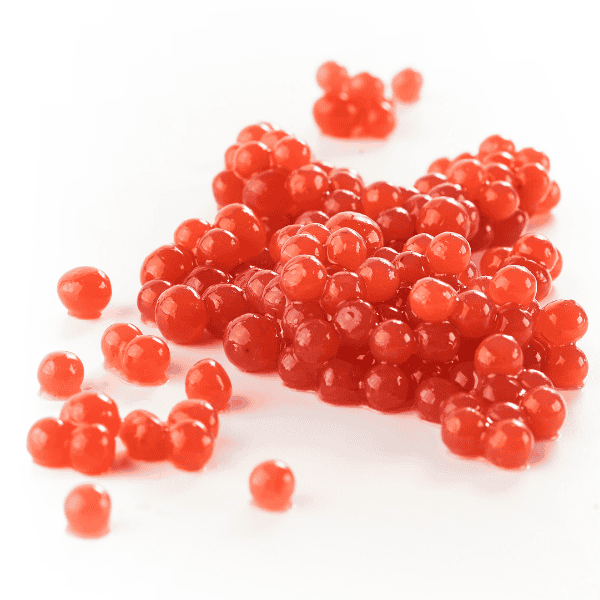
Spheres
The process of spherification typically involves mixing a liquid with Gluconolactat and then dropping the mixture into a bath of water and Alginate.
The gluconolactat reacts with the alginate bath, starting to gelify on the outside.
To achieve the perfect sphere, you must carefully control the ratio of liquid to spherification agents, as well as the temperature and concentration of the mixture and also ensure that you control the length of time the spheres are in the alginate bath, the longer they are in the bath the more they gelify.
Once they are as you would like them, remove them from the bath and place into cold water, this will stop the process. Achieving spheres requires patience, skill, and attention to detail.
However, the end result is well worth the effort, as spherified dishes can be visually stunning and offer a unique and exciting eating experience.
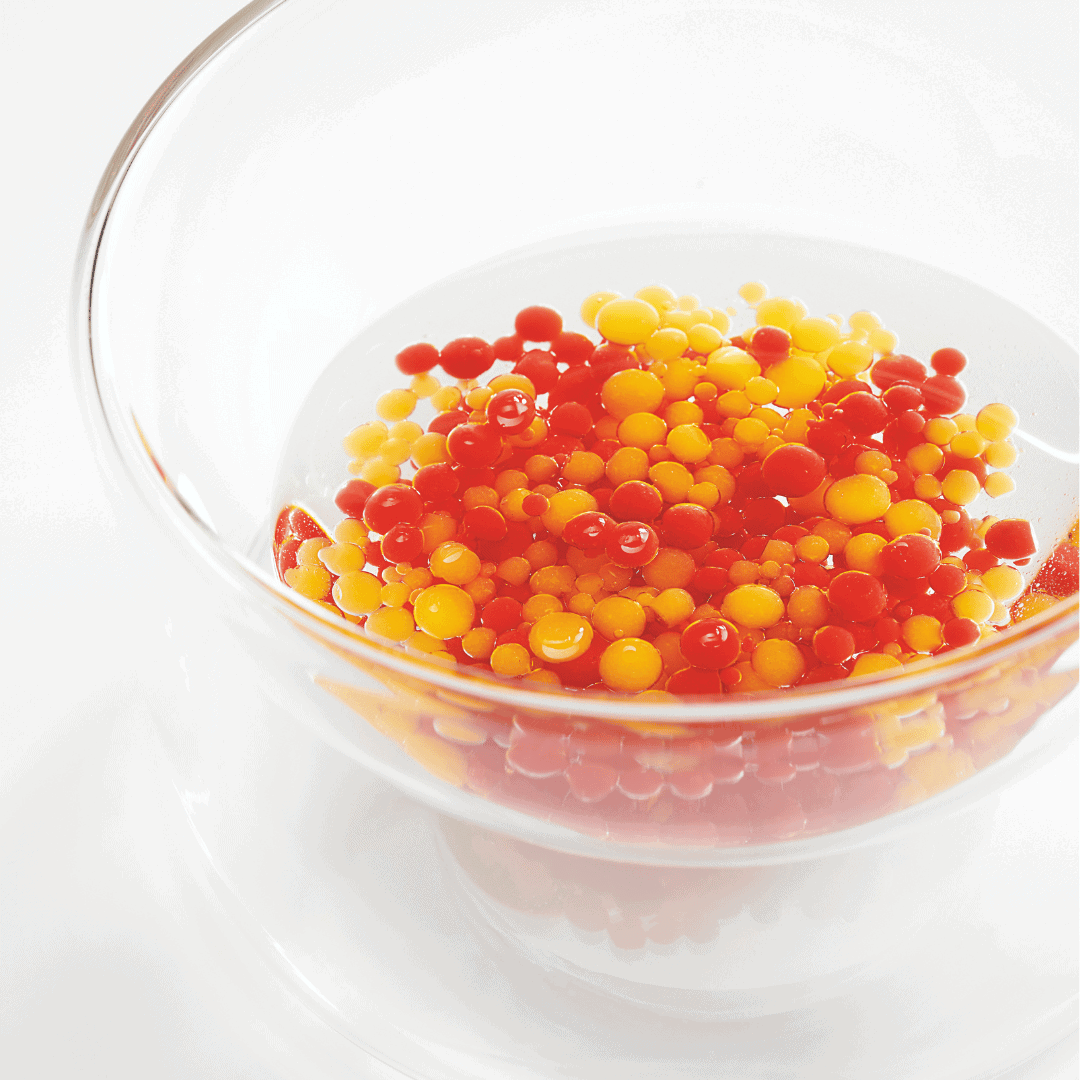
Flavours
The process of flavour infusion typically involves mixing a liquid with a flavour component, such as a fruit puree, herb or spice, and then dropping the mixture into a bath of aliginate or another liquid.
The flavour component reacts with the liquid (starts to gelify) to create a concentrated and intense flavour that is then encapsulated in the sphere.You can experiment with different flavour components to create a wide range of flavours. For example, raspberry, strawberry or mango purees can add a sweet and fruity flavour to the spheres, while basil, mint or cumin can add a fresh and aromatic flavour.
Lemon or orange juice can add a bright and citrusy flavour, and soy sauce or miso paste can add a savoury and umami flavour.
By carefully selecting and combining flavour components, you can create a wide range of flavours that can be used to enhance your dishes.
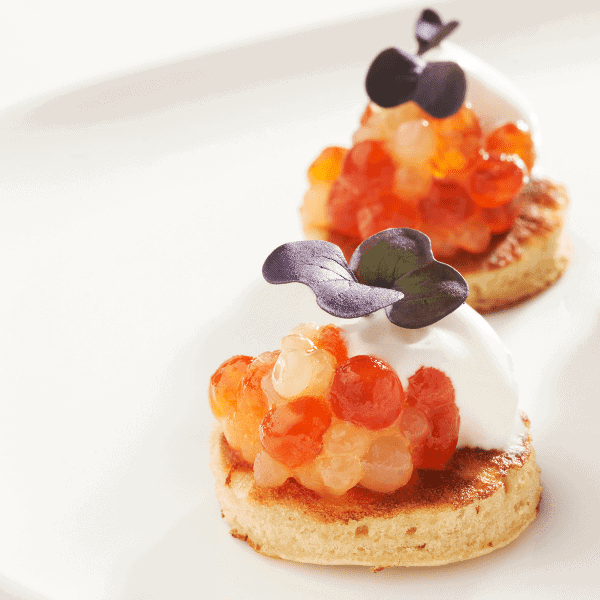
Food art
The possibilities for food art are endless, and the art of spherification is limited only by the imagination and creativity of the culinary artist.
By carefully controlling the texture and size of the spheres, they can create a wide range of designs and patterns that can be used to add visual interest and drama to any dish.
The art of spherification allows for the creation of truly unique and breathtaking food art that can change any meal to a work of art.The spheres can be arranged in intricate patterns, creating a visually stunning centerpiece for the table.
They can be used to add depth and texture to the dish and nd they can be flavoured and coloured to match the theme and style of the meal, making each dish a true masterpiece.
Trending Sosa products...

Sosa powdered food colouring - red - 70g


Sosa freeze-dried whole raspberries (with seeds) - 75g


Sosa powdered natural food colouring - black (with activating charcoal) - 20g


Sosa crispy crispy raspberry pieces (2 - 10mm) - 300g
Sosa recipes

Did someone say it’s cocktail hour?
Create a stir in your bar or restaurant with these three stunning summer cocktails.
Read more


