


Purpose behind the products
From responsible sourcing and support for farming communities to waste reduction and environmental initiatives, the brands we work with are taking positive steps across their supply chains. Explore their sustainability journeys, discover the people and processes behind the products, and access resources to help you make informed choices for your business.
Building sustainable supply chains
Great ingredients start with strong relationships. Through responsible sourcing programmes, traceability initiatives and support for farming communities, these brands are helping to build more sustainable supply chains. Explore the stories behind their commitments and discover the steps being taken across the journey from source to finished product.

Exceptional chocolate starts at origin
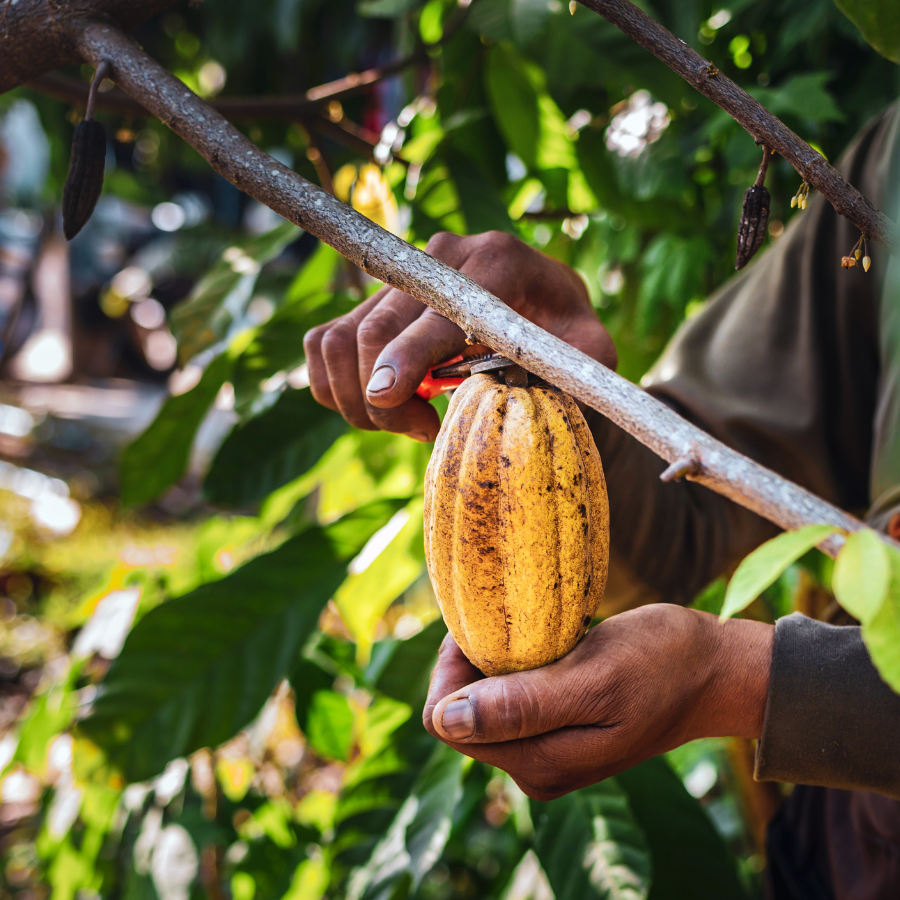
Exceptional chocolate starts at origin. Through its pioneering Cacao-Trace programme, Belcolade and Puratos are helping to build a more sustainable and transparent cocoa supply chain while creating exceptional chocolate. Going beyond traditional certification schemes, the programme focuses on delivering added value at every stage of the journey, particularly for the cocoa farmers whose expertise and livelihoods are at the heart of chocolate production.
By combining traceability with expert fermentation techniques, Cacao-Trace helps unlock richer flavour while supporting farming communities, encouraging positive environmental action and creating opportunities for a more sustainable future for cocoa. For every kilogram of Cacao-Trace certified chocolate purchased, €0.10 is returned to cocoa-farming communities through the Chocolate Bonus, helping to improve living standards and fund local infrastructure. The bonus reached a record €3.2 million, supporting more than 24,000 farmers across eight cocoa-producing nations, with funds distributed as cash or invested in local needs such as clean water facilities and school infrastructure.

Strengthening cocoa-growing communities
A thriving cocoa sector depends on the people who make it possible. Guided by its Forever Chocolate strategy, Callebaut supports initiatives that help strengthen cocoa-growing communities, promote responsible farming practices and address the social and environmental challenges facing cocoa production around the world.
Working alongside farmers, cooperatives and local partners, programmes including Cocoa Horizons help improve traceability, support farmer training and encourage more sustainable agricultural practices. Cocoa Horizons is funded through customer premiums on sustainable Horizons chocolate and cocoa products, contributions from donors and partners, and Barry Callebaut’s own contributions towards responsible cocoa sourcing. These funds support initiatives designed to strengthen cocoa-growing communities and contribute to the long-term resilience of cocoa-producing regions.

Creating opportunities through cocoa
The Chocolate Dream is Luker Chocolate's long-term sustainability plan, created to help improve the lives of cocoa-growing families, strengthen rural communities and support environmental balance across Colombia's cocoa-growing regions.
Built on collaboration, the initiative brings together farmers, communities, customers, NGOs and local partners to deliver projects that create positive economic, social and environmental impact. From supporting family incomes and community wellbeing to promoting regenerative agricultural practices and protecting natural resources, The Chocolate Dream takes a holistic approach to creating lasting value throughout the cocoa supply chain.

Supporting responsible cocoa sourcing
Behind every chocolate decoration is a commitment to sourcing cocoa responsibly. As a Rainforest Alliance Certified buyer, Dobla supports farming practices that help protect the environment while creating better opportunities for cocoa farmers and their communities.
Alongside its focus on quality and food safety, Dobla's responsible sourcing approach helps contribute to a more sustainable cocoa supply chain, supporting positive change from cocoa-growing regions through to the finished chocolate decorations enjoyed by customers around the world.

Supporting people, communities and nature
For Ofi, sustainability centres around four key priorities: helping farmers prosper, supporting thriving communities, taking action on climate change and regenerating the living world. Together, these pillars shape the company's Choices for Change strategy, recognising that the future of agriculture depends on both people and the environment.
Across its global supply chains, Ofi supports initiatives that promote responsible sourcing, improve traceability and strengthen the resilience of farming communities. By working alongside growers, producer communities and supply chain partners, the business is helping to address environmental and social challenges while supporting a more sustainable future for agriculture.

Growing a better future for vanilla
For Prova Gourmet, exceptional vanilla starts at its source. Through its Care&Act programme, the company works directly with a network of 264 partner planters in Madagascar, supporting a more ethical and transparent vanilla supply chain.
Prova provides training in good agricultural practices to help ensure vanilla is harvested at the right stage, alongside training in preparation techniques to support exceptional quality. The company also provides the materials needed for harvesting, storing and securing the vanilla. Through this approach, more than 10,000 people have experienced positive impacts, while 100% traceable vanilla helps provide greater visibility from its source.

Leading the way in sustainable rice farming
For over a century, Riso Gallo has combined rice-growing expertise with a commitment to more responsible farming. As the only European rice miller producing authentic rice from certified sustainable farming, the company works with independently verified standards to help support both growers and the environment.
Its commitment extends beyond the field, with 100% renewable electricity used across its operations since 2016, alongside recyclable packaging and recognised sustainability certifications. By continually investing in responsible production, Riso Gallo is helping shape a more sustainable future for rice while maintaining the quality it is known for.

Protecting natural resources
Protecting the environment starts with the way ingredients are grown, produced and managed. From improving manufacturing efficiency and reducing emissions to supporting biodiversity and more sustainable farming practices, these brands are taking practical steps to reduce their environmental impact and help protect natural resources for the future.

Reducing the impact of cocoa production
Creating high-quality cocoa ingredients also means continually improving the way they're produced. As part of Ofi's Cocoa Compass initiative, deZaan is investing in more sustainable cocoa processing by improving energy efficiency, reducing greenhouse gas emissions and making better use of resources across its manufacturing sites.
One example is the use of circular biomass boilers fuelled by cocoa shells, a by-product of the production process that helps generate renewable energy for manufacturing. Alongside ongoing investment in cleaner technologies and more efficient production methods, these initiatives are helping to reduce the environmental impact of cocoa manufacturing while supporting a more sustainable future for the industry.

Caring for Jersey's natural environment
Jersey Dairy farmers are committed to caring for the Island's unique natural environment through responsible farming practices while actively working to reduce their carbon footprint. From enhancing biodiversity and improving soil health to managing water responsibly and improving energy efficiency, sustainability is embedded in the way they care for the land and their herds.
As the first dairy in the world to achieve LEAF Marque certification on its milk cartons, Jersey Dairy is recognised for farming in harmony with nature. Alongside partnering with Trinity AgTech to better understand and reduce carbon emissions, the naturally feed-efficient Jersey cow also helps lower the environmental footprint by producing rich, creamy milk using less feed than larger dairy breeds.

Closer to home, closer to nature
Caramanfruit's pear orchards are located just 12 km from the factory, helping to minimise transport and the associated carbon footprint while supporting the local economy. Apricot and peach orchards are also situated close to the production site in the Rhône Valley, creating shorter supply chains and supporting local agriculture.
Alongside the focus on local sourcing, Caramanfruit's blackcurrants are grown in France using methods that promote biodiversity. The plantations help preserve pollinators and encourage natural pollination, with this approach contributing to crop yield increases of up to 20%.

From surplus to standout ingredients
Reducing food waste is at the heart of Chichester Food & Drink Company's mission. Growers typically produce around 25% more fruit to account for changing weather, pests and disease, creating surplus produce that would otherwise go to waste. Chichester gives this Grade A fruit a new purpose, transforming it into the award-winning RESQ fruit powder range for professional kitchens and food manufacturers.
The same thinking is behind Nice Slice, a range of air-dried citrus garnishes developed to help tackle the fact that over 50% of freshly sliced citrus used in hospitality is wasted. By creating practical, long-lasting alternatives from surplus fruit, Chichester is helping businesses cut waste while making the most of every harvest.
More than meets the eye


Leading with sustainability
For these brands, sustainability is woven into the way they do business. From responsible sourcing and product innovation to manufacturing, packaging and people, their commitments span multiple areas and reflect a long-term approach to creating positive impact across the food industry.

Reducing waste through practical innovation
For Essential Cuisine, sustainability is built into the products and processes behind every kitchen solution. The company focuses on reducing waste, improving resource efficiency and making more responsible choices across its operations, from packaging and production to sourcing and supply chain standards.
Its products are designed with long shelf life and versatility in mind, helping chefs make the most of ingredients while reducing unnecessary food waste. Alongside its certified zero waste to landfill site, the removal of black plastic from its branded range, FSC-certified packaging and SEDEX membership, these initiatives reflect a practical approach to creating culinary products that support both professional kitchens and a more sustainable future.

Building sustainability into every step
Creating great ingredients also means thinking beyond the finished product. Across its global operations, IRCA combines responsible sourcing, product innovation, environmental responsibility and support for people and communities, recognising that meaningful progress comes from action at every stage of the business.
Its approach focuses on developing more sustainable ingredients and production processes while reducing environmental impact and strengthening responsible business practices. Supported by measurable sustainability reporting and recognised with the EcoVadis Gold Medal in 2024 and 2025, placing IRCA among the top 5% of companies worldwide for ESG performance in its sector, these commitments reflect a long-term focus on continuous improvement and responsible growth.

Every detail matters
The biggest sustainability improvements are often the result of thousands of smaller decisions. At Pidy, ingredient sourcing, product design, packaging and production are all considered as part of a broader commitment to reducing environmental impact and strengthening responsible business practices.
Guided by a four-pillar CSR approach, the company focuses on people, product innovation, responsible sourcing and more efficient production. Ethically sourced ingredients, local sourcing where possible, fully recyclable packaging made with repurposed materials and ongoing work to improve production practices all reflect a practical approach that places sustainability at the heart of everyday decision-making.

Powering a more responsible production
Sustainability at Rubicone starts within its production site, where investment in renewable energy and smarter technology is helping reduce its environmental impact. Solar panels covering more than 5,500 square metres generate clean energy, while digitalised production lines monitor electricity and water consumption in real time to help reduce industrial waste.
The approach also extends to everyday operations, with waste sorting and electric scooters and bicycles used around the site. Alongside its environmental efforts, Rubicone is developing more inclusive ingredient solutions, including vegan, gluten-free, sugar-free and lactose-free product ranges designed to meet different dietary needs.

Rethinking ingredients for the future
The future of food is being shaped by the ingredients behind it. Sosa develops innovative ingredient solutions that help chefs and pastry professionals create products with less sugar, less fat and more plant-based options, while meeting the changing expectations of modern consumers.
Its focus on clean label ingredients, vegetable-based texturizers and natural formulations reflects a practical approach to innovation that respects the planet. By combining functionality with more sustainable ingredient solutions, Sosa is helping culinary professionals create products that are both forward-thinking and rooted in quality.


